


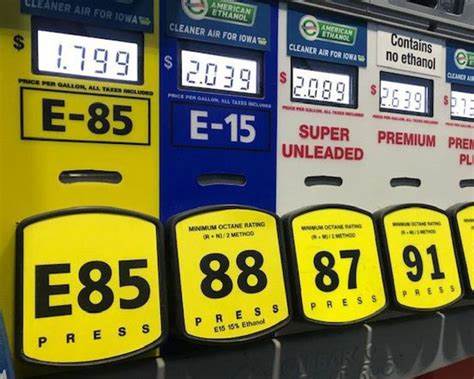
After my RaceChip S install on my Project Sport Limo (2017 BMW 750i), I have been monitoring the engine to see how it handles the added +3 PSI. Due to living in Colorado, 93 octane gas doesn’t seem to exist, so on practically every setting on the RaceChip I was seeing small amounts of KR (Knock Retard); this could be false knock as my current method of seeing KR just shows 1 or 0 for events (not the amount of timing pulled). A common fix to this issue is upgrading spark plugs to a 1-step colder version (for stage 1), but before I go that route (will eventually), I figure I would experiment with some E-85 that I found locally. If all goes well, I can most likely bump up my RaceChip to at least the 3/5 setting, then keep it there (I liked that setting the most).
In the realm of automotive enthusiasts and performance tuning, the concept of fuel blends has gained significant attention. One such blend, known as E30, combines 91 octane gasoline with approximately 30% ethanol content, typically sourced from E85 (which is 85% ethanol and 15% gasoline); this blend is particularly favored among enthusiasts looking to enhance engine performance while maintaining reliability and efficiency. In this blog post, we’ll delve into how you can effectively run an E30 blend in your 2017 BMW 750i, understanding its benefits, considerations, and practical tips.
Understanding the E30 Blend
1. Fuel Composition:
- 91 Octane Gasoline: This serves as the base fuel, providing stability and consistency in combustion.
- E85 (85% Ethanol, 15% Gasoline): Ethanol, a renewable biofuel, has a higher-octane rating (typically around 100-105) compared to gasoline; this higher octane allows for more aggressive ignition timing and boosts knock resistance.
2. Mixing Ratio:
- For your BMW 750i with a 20.6-gallon fuel tank, a common E30 blend consists of approximately 15.11 gallons of 91 octane gasoline and 5.49 gallons of E85. This ratio achieves a blend close to 30% ethanol content.
3. Benefits of E30 Blend:
- Improved Performance: Ethanol’s higher-octane rating allows for increased boost levels and more aggressive tuning without encountering detonation (knocking); this can lead to noticeable gains in horsepower and torque, especially in turbocharged or supercharged engines.
- Reduced Detonation: Ethanol has superior cooling properties and burns cleaner than gasoline, which reduces the likelihood of engine knock under high-performance conditions; this is crucial for tuned engines that operate at higher compression ratios or increased boost levels.
- Cleaner Combustion: Ethanol has a higher oxygen content, promoting more complete combustion and potentially reducing carbon deposits on valves and pistons over time.
Practical Considerations
1. Tuning Requirements:
- Before switching to an E30 blend, ensure your BMW 750i’s engine management system (ECU) is capable of adapting to the higher ethanol content. Some vehicles may require custom tuning to optimize performance and fuel efficiency.
2. Fuel System Compatibility:
- Ethanol is more corrosive than gasoline and can degrade certain rubber and plastic components in older fuel systems not designed for ethanol blends. Modern vehicles like the 2017 BMW 750i typically have components that are ethanol-compatible, but it’s wise to check manufacturer recommendations.
3. Fuel Economy and Range:
- Ethanol has a lower energy density than gasoline, which can lead to slightly reduced fuel economy when compared to pure gasoline. Expect a modest decrease in miles per gallon (MPG) when running an E30 blend.
4. Upgrade Path:
On the N63TU, in order to run full E-85, additional supporting mods are required, such as a full tune to support the fuel, and possibly items such as a Fuel-It! Universal Bluetooth Flex-Fuel Kit to keep track of ethanol levels.
Tips and Tricks
1. Fuel Quality: Always source E85 and 91 octane gasoline from reputable stations to ensure consistent quality and ethanol content.
2. Monitoring: Use a fuel mixture sensor or rely on reputable fuel stations that accurately label ethanol content to maintain the desired E30 blend ratio.
3. Cold Weather Considerations: Ethanol has a higher freezing point than gasoline. In colder climates, ensure your fuel system is adequately winterized to prevent potential fuel line freezing issues.
Conclusion
Running an E30 blend in your 2017 BMW 750i can be a rewarding experience for enthusiasts seeking improved performance without compromising reliability. By understanding the benefits, tuning requirements, and practical considerations outlined above, you can make informed decisions to optimize your vehicle’s performance while enjoying the benefits of ethanol’s higher-octane rating and cleaner combustion characteristics.
Whether you’re a seasoned tuner or exploring performance upgrades for the first time, experimenting with an E30 blend can unlock newfound potential in your BMW’s engine, providing exhilarating driving dynamics while maintaining the integrity and longevity of your vehicle’s components.
Embrace the blend, unleash the power, and elevate your driving experience with E30 in your BMW 750i with just some extra time (and math) at the fuel pump.
Testing
As with anything I do with this car, I will take my time introducing E-85 to the engine, with my first fill-up consisting of only 2 gallons of E-85 and the rest with 91. It was quite hot this day and I only did a small pull heading to my house after the gas station but did notice that my KR events were lowered, but still present. Next time I get gas (will wait until most of the gas tank is empty), I will do the full 5.49 gallons to get up to a full E-30 blend, then test some of the other RaceChip settings. TBD!
Update 7/1/24
I filled up 4 gallons of E-85 over the weekend and can finally no longer see any detonation! So far, I have gone up to setting 3/5 on my RaceChip S, and the power delivery is instant and continuous. If I keep running a E-20/30 blend, I may invest in an ethanol gauge at some point to ensure I never go above more than what I need, but at the moment, I think this will do. Colder spark plugs will still help as the stock plugs seem to go bad faster when tuned, so I will get that done before I try pushing the car more. Stay tuned!
Update 7/18/24
Finally had a chance to crank up the RaceChip to setting 5/5 and man, it pulls so much harder now, but the low-end power seems to be somewhat lacking. I believe I will go down to setting 4 as that seemed to have more power starting off. Also, I am still seeing 0 KR! I just did a few highway pulls this morning, but everything is looking great. Next up, I will get a Draggy so I can see what 0-60 and quarter mile times I am running, and then find which RaceChip setting offers better real-world performance.
Categories: Random Thoughts


 Securing The Universe