


Congrats on our 580th post. We are now nearing the 600 mark!
Introduction
In the ever-evolving landscape of cybersecurity, the battle between defenders and attackers is a constant struggle; one critical aspect of this ongoing conflict is the realm of password security. Passwords serve as the first line of defense against unauthorized access, making them a prime target for malicious actors seeking to exploit vulnerabilities. In this blog post, we will explore the fascinating world of password cracking tools and their utilization of computer graphics cards, shedding light on the techniques employed by both cybersecurity professionals and hackers.
Understanding Password Cracking
Password cracking is the process of attempting to decipher passwords from stored or transmitted data. Cybersecurity professionals use cracking techniques to identify weak passwords, uncover vulnerabilities, and enhance overall security. However, malicious actors may also employ similar methods to gain unauthorized access to systems and sensitive information. Several password cracking tools have gained notoriety in the cybersecurity community due to their effectiveness and versatility. Let’s explore some of the most widely used tools:
John the Ripper:
A versatile and widely-used password cracking tool.
Supports various password hash algorithms.
Utilizes dictionary attacks and brute-force techniques.
Hashcat:
Known for its speed and efficiency in cracking password hashes.
Supports a wide range of algorithms and attack modes.
Harnesses the power of GPU acceleration for faster results.
Ophcrack:
Specializes in cracking Windows passwords using rainbow tables.
User-friendly interface for both beginners and advanced users.
Effective against weak passwords.
RainbowCrack:
Utilizes precomputed rainbow tables to crack password hashes.
Efficient for offline attacks against hashed passwords.
Graphics Cards in Password Cracking
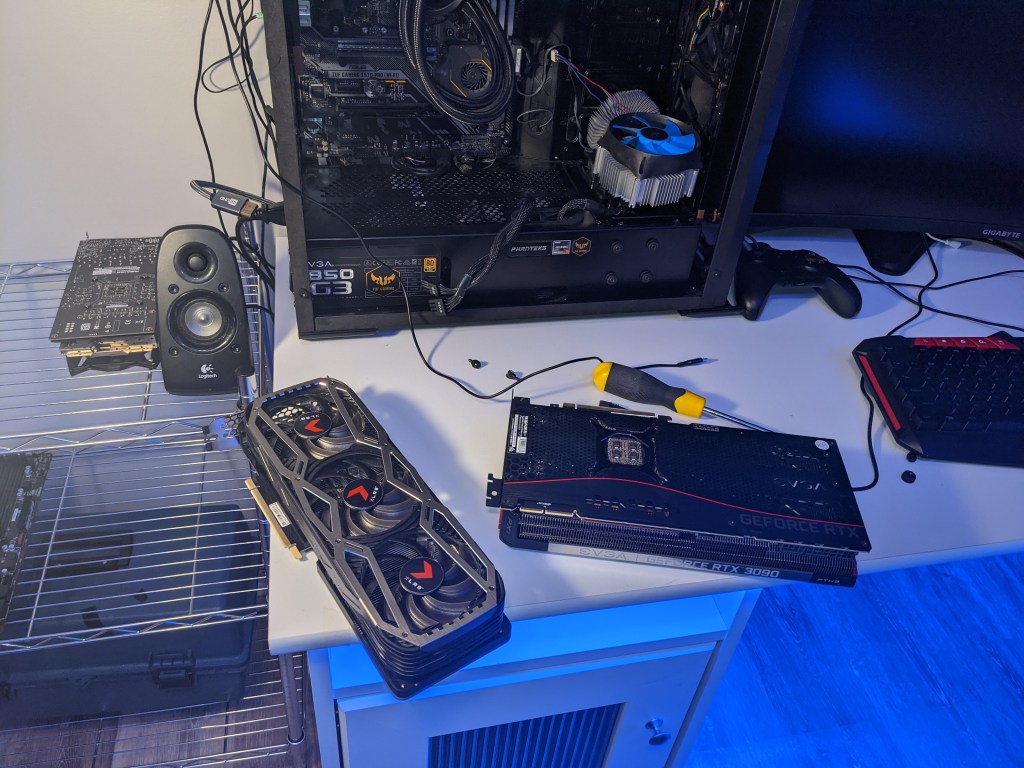
Modern password cracking tools often leverage the computational power of graphics processing units (GPUs) to accelerate the brute-force and dictionary attack processes. GPUs, originally designed for rendering graphics, excel in parallel processing, making them well-suited for the highly parallelizable nature of password cracking algorithms. Graphics cards can perform parallel computations, enabling them to test multiple password combinations simultaneously; this significantly accelerates the password cracking process compared to traditional central processing units (CPUs). As I have leftover parts from my Bitcoin mining days, I figured I would try this project out.

Optimizing Performance:
Cybersecurity professionals and ethical hackers often build dedicated password-cracking rigs with multiple high-performance GPUs to optimize the cracking process.
Custom configurations and overclocking may be employed to maximize GPU performance.
Ethical Considerations
While password cracking is a legitimate and crucial aspect of cybersecurity, it is essential to approach it ethically and within legal boundaries. Professionals in the field use these tools responsibly to identify and rectify security weaknesses. Unauthorized and malicious use of password cracking tools is illegal and can lead to severe consequences.
Conclusion
The use of password cracking tools, coupled with the power of graphics cards, highlights the ongoing arms race between cybersecurity defenders and malicious actors. As technology advances, it is crucial for ethical hackers and cybersecurity professionals to stay vigilant, employing the latest tools and techniques to safeguard sensitive information. Understanding the landscape of password cracking tools provides valuable insights into the ongoing efforts to fortify digital security in an increasingly interconnected world.
Testing
In the world of cybersecurity, the importance of robust password security cannot be overstated. However, ethical hacking and security professionals often find themselves on the other side of the fence, tasked with identifying vulnerabilities and strengthening defenses. We will now explore the utilization of the powerful John the Ripper password cracking tool on an RTX 3090 graphics card, unraveling the process from setup to execution.
Setting Up John the Ripper on an RTX 3090
Before diving into password cracking, it’s essential to set up John the Ripper and ensure compatibility with the RTX 3090:
System Requirements:
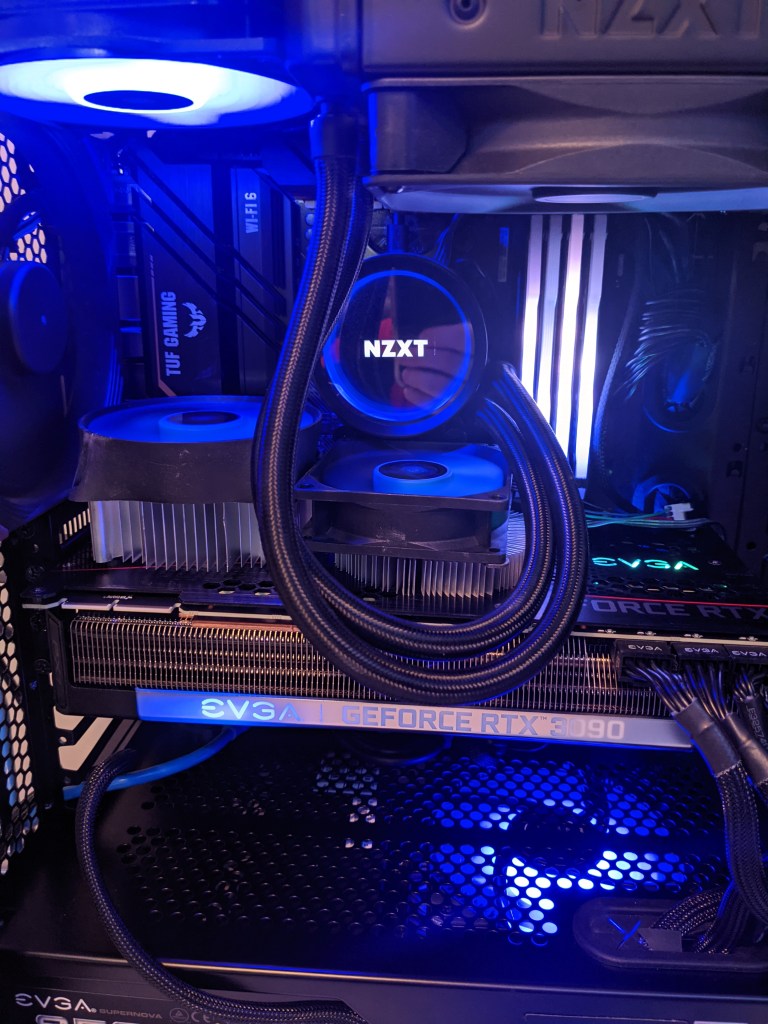
Ensure your system is equipped with an RTX 3090 graphics card.
Install the latest NVIDIA drivers to maximize compatibility.
John the Ripper Installation:
Download the latest version of John the Ripper from the official website.
Follow the installation instructions for your operating system.
CUDA Support:
Verify that John the Ripper is configured to utilize CUDA for GPU acceleration.
CUDA is NVIDIA’s parallel computing API, and its integration significantly boosts password cracking speed.
Wordlist Preparation:
John the Ripper relies on wordlists for dictionary attacks. Prepare a comprehensive wordlist or use existing ones available online.
When preparing wordlists, social engineering goes a long way in the goal of compiling user-specific possible password variations. Comb through their social media accounts and such to gather intel pertaining to their pets, favorite vacation spots, etc., as users tend to use passwords with this info.
Cracking Passwords with John the Ripper on RTX 3090
Now that the setup is complete, let’s explore the steps involved in using John the Ripper with an RTX 3090:
Choose Target Hashes:
Identify the type of password hashes you want to crack. John the Ripper supports various hash algorithms.
Generate Hashes or Obtain Hashes:
Obtain password hashes from the target system; this may involve extracting hashed passwords from a file or capturing them during a penetration test.
Configure John the Ripper:
Configure John the Ripper with the target hashes and specify the attack mode (dictionary, brute force, etc.).
Enable GPU acceleration by ensuring that CUDA is properly configured.
Initiate the Attack:
Start the password cracking process by running John the Ripper with the configured settings.
Monitor the progress as John the Ripper attempts to match password hashes with entries in the wordlist or through brute-force methods.
Review Results:
Once the process is complete, review the results to identify successfully cracked passwords.
Analyze the findings to assess the strength of passwords and recommend improvements for enhanced security.
Ethical Considerations
It’s crucial to emphasize the ethical use of password cracking tools. Always ensure that you have explicit authorization to perform password cracking activities, especially in professional settings or during security assessments. SecuringTheUniverse does not condone using this information/tool in a harmful way.
Conclusion: Balancing Power and Responsibility
Harnessing the computing power of an RTX 3090 graphics card for password cracking with John the Ripper showcases the intersection of technology and cybersecurity. As security professionals, ethical hackers, and system administrators, the responsibility lies not only in understanding the tools at our disposal but also in using them judiciously to strengthen the digital fortifications that guard sensitive information. By delving into the world of password cracking, individuals can gain insights into potential vulnerabilities and contribute to creating more resilient and secure systems.
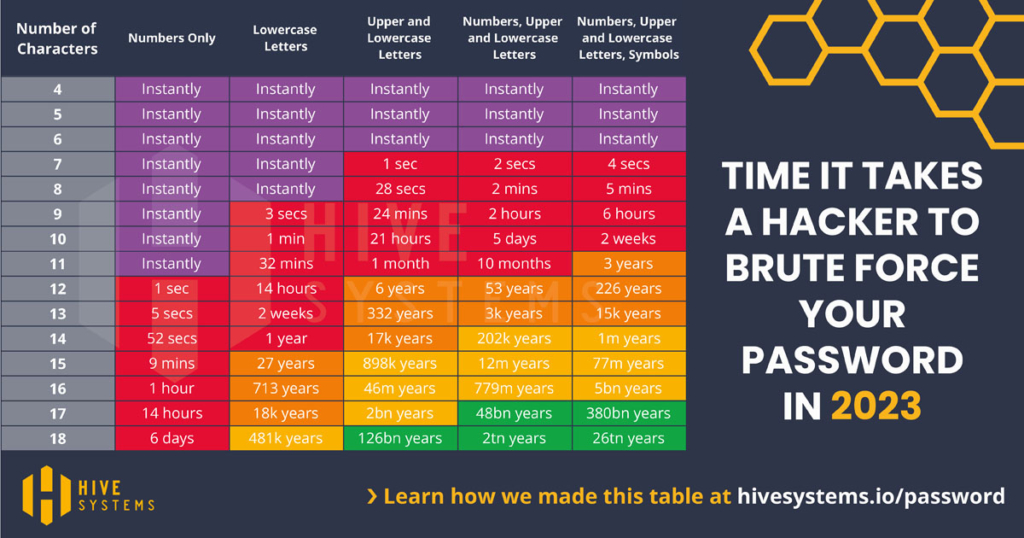
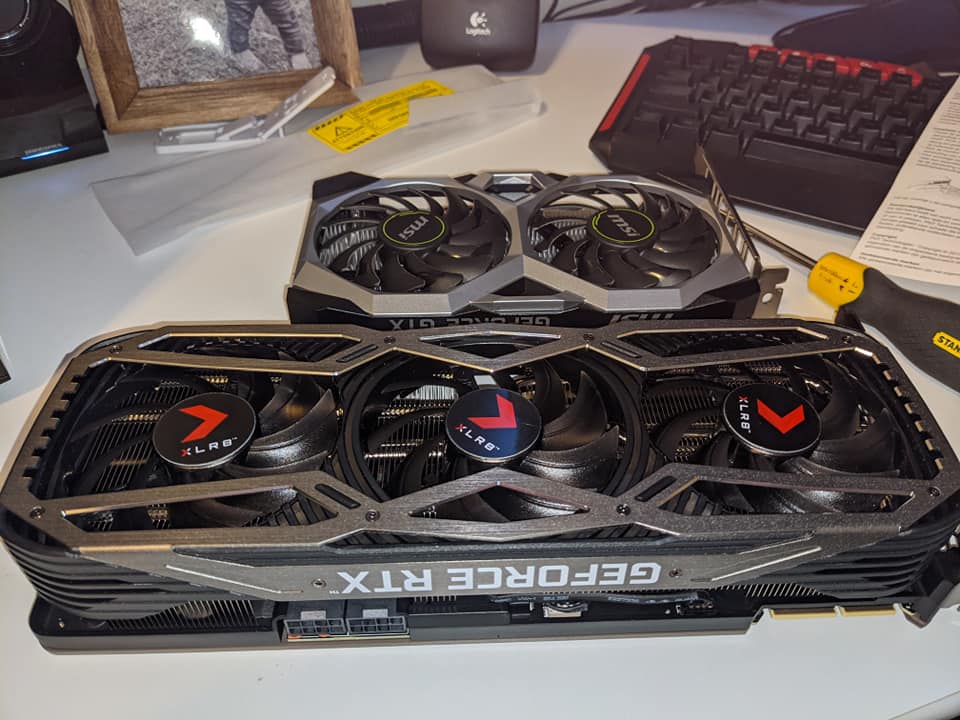
While my RTX 3090 is getting older, and the newer 4000 series holds significant upgrades, the 3090 can still hold its own. While I haven’t attempted to break a password with a high character length, playing around with attempting to bypass a few test passwords have been a breeze. I ended up trying a few cracking programs, and seemed to do pretty well considering the short amount of time I devoted to the hardware-side of things. In the future, I would like to see if I can connect a few GPUs at once and use it to significantly reduce the time it takes to deploy dictionary attacks. Always fun to learn. Wish me luck!
Categories: Security


 Securing The Universe